
Garage Door SEO vs Google Ads: Which Is Better?
Every garage door company owner eventually asks the same question: should I put my marketing budget into SEO, into Google […]
This is one of the first questions almost every electrical contractor asks once they decide it’s time to take marketing seriously, and it’s a fair one. You wouldn’t buy materials for a…

This is one of the first questions almost every electrical contractor asks once they decide it’s time to take marketing seriously, and it’s a fair one. You wouldn’t buy materials for a job without knowing roughly what they cost, so it makes sense to want the same clarity before spending money on ads, a website, or SEO. The frustrating part is that most answers online are either vague or clearly written to justify whatever number an agency wants to sell you.
Let’s break this down honestly, based on how the numbers actually work for a business your size, so you can walk away with a realistic budget range instead of a guess.
Most electrical contractors, depending on the size of their business and how competitive their local market is, end up spending somewhere between 5% and 12% of their gross revenue on marketing each year. A smaller, single-crew operation trying to fill a modest schedule will sit toward the lower end of that range. A larger contractor with multiple crews, several service areas, and real competition from bigger companies will often need to sit closer to the upper end just to stay visible.
If you’re a newer business still building your reputation and online presence, it’s common to spend a bit more upfront, sometimes closer to 12-15%, since you’re building things like your website, reviews, and local SEO foundation from scratch. Once that foundation is in place, many contractors are able to scale their spending back down as organic traffic and repeat referrals start doing more of the work.
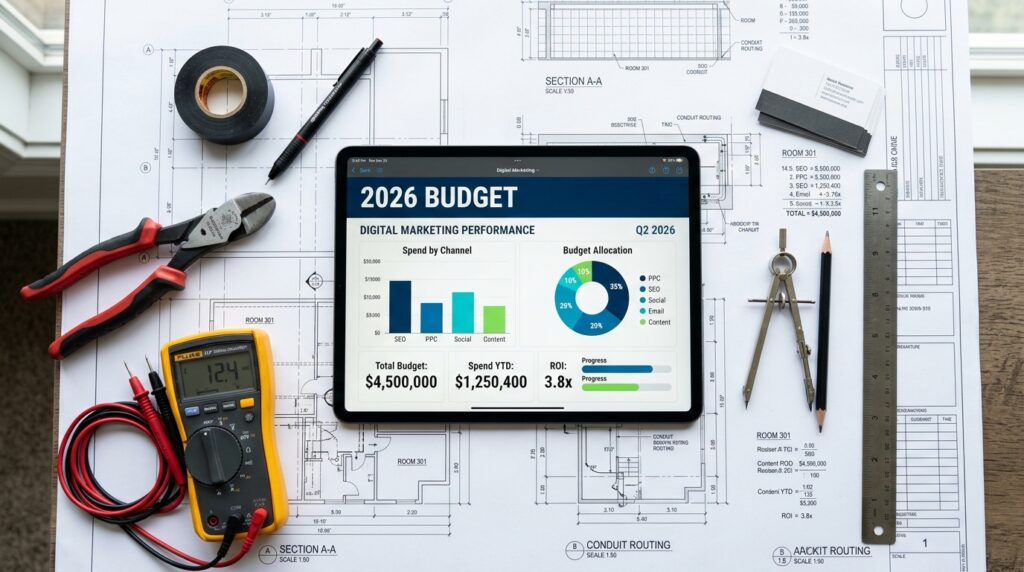
A digital marketing budget for an electrical contractor isn’t one single expense. It usually splits across a few different areas, and how you divide it depends on how urgently you need new jobs versus how much you’re building for the long term.
Your website is typically a one-time or infrequent cost, unless you’re paying for ongoing hosting, maintenance, or updates. A professional, fast, mobile-friendly site is the foundation everything else points back to, so it’s worth getting right rather than treating as an afterthought.
Local SEO is usually an ongoing monthly investment, covering things like Google Business Profile optimization, on-page content, local citations, and backlink building. This is the part of your budget that builds equity over time rather than disappearing the moment you stop paying.
Paid advertising, whether that’s Google Ads, Local Service Ads, or both, is the part of your budget that delivers the fastest results but also stops producing the moment you pause it. Many contractors treat this as the flexible portion of their budget, scaling it up during slower months and easing off once the schedule is full.
Review management and reputation tools often carry a smaller, steady monthly cost, but the return here tends to be disproportionately high, since reviews directly influence both your local rankings and how likely someone is to call you over a competitor.
Picture a mid-sized electrical contracting business doing a solid volume of residential and light commercial work. A reasonable starting split might look like a modest recurring investment in local SEO and content each month, a flexible Google Ads or Local Service Ads budget that gets adjusted based on how full the schedule is, and a smaller ongoing cost for review generation and basic reputation monitoring. None of these numbers need to be enormous individually. What matters is that they work together consistently, month after month, rather than being treated as a one-time project.

It’s tempting to treat marketing as an expense to minimize, especially when a schedule already feels busy. But underspending has its own hidden cost. A contractor who pulls back on marketing the moment jobs slow down often finds themselves scrambling months later when the pipeline runs dry, because SEO and reputation building take time to rebuild once neglected. Consistent, modest spending tends to outperform sporadic bursts of heavy spending followed by long gaps.
On the other hand, overspending without a clear strategy, throwing money at ads without tracking which keywords convert, or paying for SEO work without ever checking whether rankings are actually improving, wastes budget just as easily. The goal isn’t to spend as much as possible. It’s to spend consistently, in the right places, and to actually track what that spending is producing.
Before locking in a number, it helps to get honest answers to a few questions specific to your business. How competitive is your local market? A contractor in a dense metro area with a dozen established competitors will generally need a larger budget than one in a smaller town with less competition. What’s your current online foundation like? A business starting with an outdated website and almost no reviews will need heavier upfront investment than one that already has a strong Google Business Profile and steady review flow. And how urgently do you need new jobs right now versus how much you’re building for the next few years? That balance should shape how much goes toward paid ads versus long-term SEO.
A budget number means very little without a way to measure what it’s actually producing. Set up call tracking so you know which leads are coming from which channels, and check in monthly rather than assuming everything is working simply because money is going out the door. If a particular keyword or ad isn’t generating calls after a reasonable testing period, that budget should move somewhere that is working. Over time, this kind of tracking tells you far more about the right budget for your specific business than any general percentage ever could.
A reasonable starting point for most electrical contractors is somewhere between 5% and 12% of gross revenue, adjusted based on how competitive your market is and how established your online presence already is. What matters more than hitting an exact number is treating that budget as a consistent, ongoing part of running your business, tracking where it’s going, and adjusting based on real results rather than guesswork. The contractors who see the strongest, steadiest growth aren’t necessarily the ones spending the most. They’re the ones spending consistently, in the right places, month after month.
Most small electrical contractors spend somewhere between 5% and 8% of their monthly revenue on marketing, with a larger share going toward local SEO and Google Business Profile management, and a smaller, flexible portion set aside for paid ads when the schedule needs filling quickly.
For contractors with a tight budget, a mix of both usually works best. A modest, ongoing investment in local SEO builds long-term visibility that doesn’t disappear, while a smaller, tightly targeted Google Ads budget can fill immediate gaps in the schedule. Relying on only one tends to leave gaps the other would have covered.
If your current website is outdated, slow, or not mobile-friendly, it’s worth fixing before investing heavily in traffic-driving efforts like SEO or PPC. Sending paid traffic to a website that doesn’t convert visitors into calls wastes budget that could otherwise be spent effectively.
Paid advertising can start generating calls within days of launching. Local SEO typically takes three to six months of consistent effort before meaningful ranking improvements show up, though this varies based on how competitive your local market is.
Yes, many electrical contractors adjust their paid advertising spend seasonally, increasing it during peak demand periods like summer cooling season or holiday lighting season, while keeping SEO and content efforts steady year-round since those build value regardless of season.
Keep reading
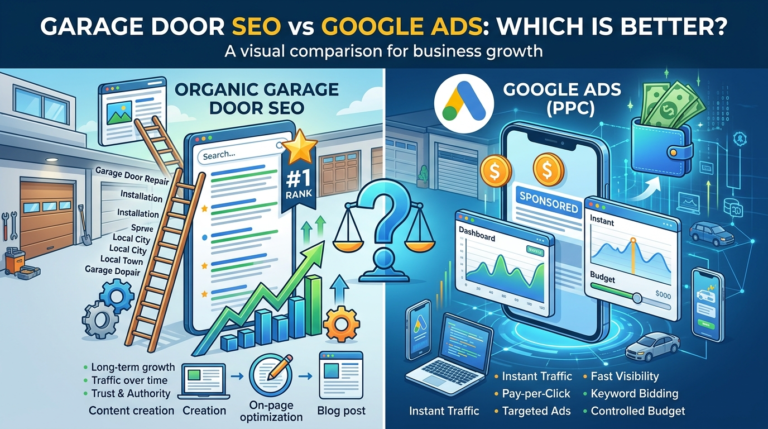 Blog
Blog Every garage door company owner eventually asks the same question: should I put my marketing budget into SEO, into Google […]
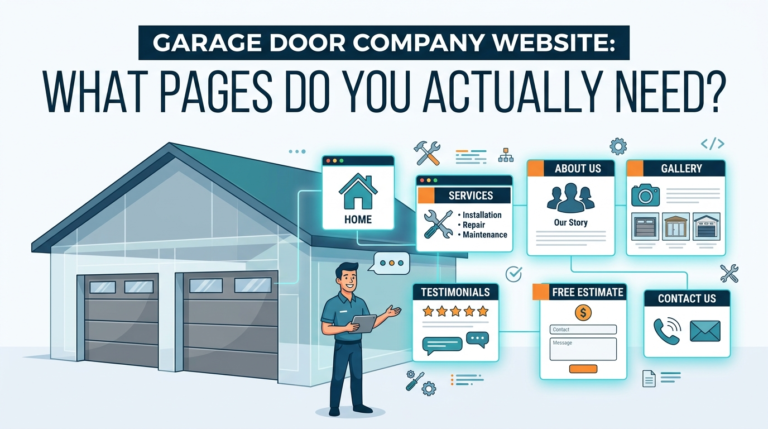 Blog
Blog A lot of garage door companies build a website with a homepage, a services page, and a contact page — […]
 Blog
Blog SEO takes months to pay off. Google Ads can start ringing your phone today. For garage door companies, where a […]
Marketing
Reviews, local SEO and a website that is easy to use work best together. Tell us about the business and we’ll tell you, plainly, what we would do next.