
Garage Door SEO vs Google Ads: Which Is Better?
Every garage door company owner eventually asks the same question: should I put my marketing budget into SEO, into Google […]
A lot of garage door companies build a website with a homepage, a services page, and a contact page — and then wonder why they’re not showing up in search or converting…
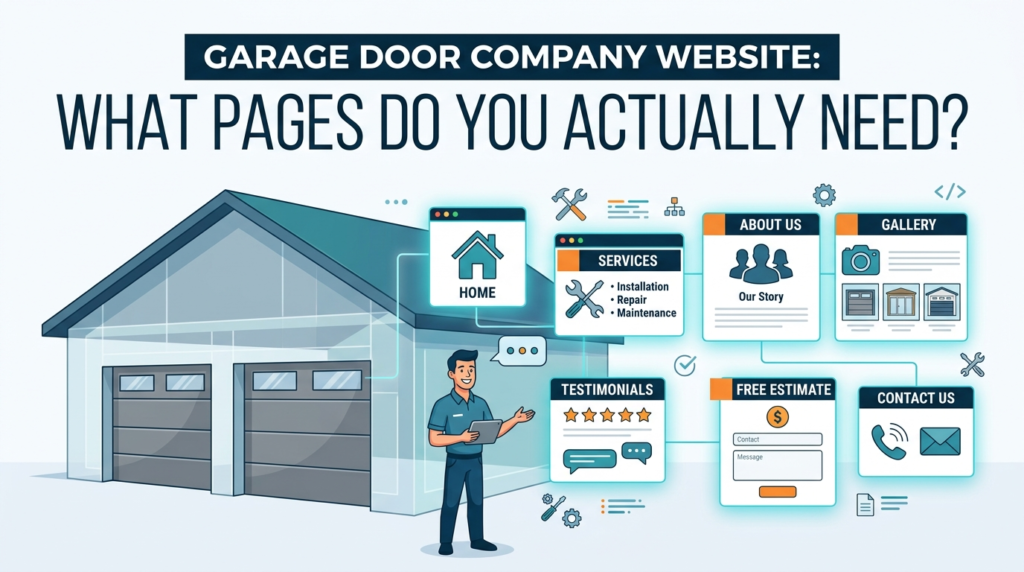
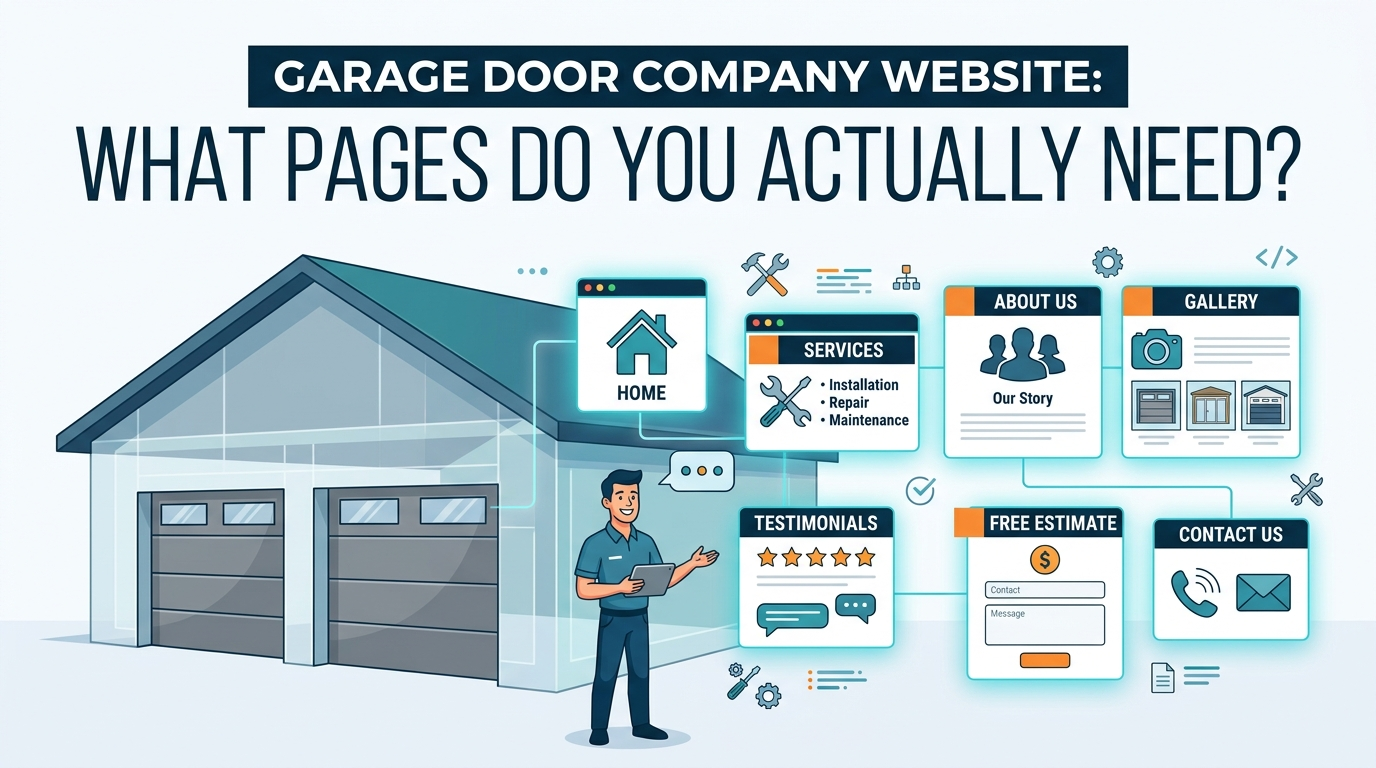
A lot of garage door companies build a website with a homepage, a services page, and a contact page — and then wonder why they’re not showing up in search or converting visitors into calls. The truth is, the businesses winning the most calls online usually have a more deliberate site structure, with specific pages built for specific jobs: ranking for the right searches, answering the right questions, and making it effortless to pick up the phone. Here’s a complete breakdown of every page your garage door website actually needs, and why each one matters.
Your homepage is often the first impression, but it shouldn’t try to do everything. Its job is to quickly confirm three things: what you do, where you serve, and how to reach you.
A strong homepage includes:
Avoid cramming your entire service list, every city you serve, and your full company history onto the homepage. That’s what the pages below are for.
This is the page type most garage door websites get wrong, either skipping it entirely or lumping everything into one generic “Services” page. Each core service should have its own dedicated page:
Each page should explain what the service involves, common signs a customer needs it, rough pricing expectations (even a range builds trust), and a direct call-to-action. Separating these out does two things: it helps you rank for specific searches like “garage door spring repair” instead of competing against yourself with one diluted page, and it lets a visitor land exactly where their problem is addressed, which increases the odds they call instead of bouncing.
If your company serves more than one city or region, you need individual location pages, not just a list of cities mentioned somewhere in the footer. A location page should include:
Location pages are one of the highest-impact additions for local search visibility, because they directly match “[service] + [city]” searches — exactly how urgent, ready-to-call customers search.
Garage door repair involves letting a stranger into your garage, often on short notice. An About page exists to reduce that hesitation. It should cover:
This page won’t drive much direct traffic from search, but it plays a real role in whether a visitor who’s already on your site decides to trust you enough to call.
Even if reviews appear elsewhere on your site, a dedicated reviews page gives visitors one place to see proof before committing. Pull in Google reviews, add a few detailed written testimonials, and if you have before/after job photos, include them here too. This page also gives you something concrete to link to from ads and social posts.
Garage door customers frequently search things like “garage door repair cost” or “how much does a new garage door cost” before ever contacting anyone. A pricing guide page — even with ranges rather than exact numbers — captures that research-stage traffic and positions you as transparent compared to competitors who hide pricing entirely. This page can also double as blog-style content that ranks well over time.
An FAQ page serves two purposes: it answers common pre-call questions (turnaround time, warranty coverage, service area, emergency availability) and it’s excellent for capturing long-tail search traffic. Questions like “how long does garage door installation take” or “do you offer same-day repair” often get searched almost word-for-word.
A blog isn’t just for SEO padding, it’s where you answer the questions people have before they’re ready to call, and where you build the kind of topical authority that helps your service and location pages rank too. Useful topics include maintenance tips, signs a spring is about to fail, and what to expect during an installation. This is also the section that supports broader garage door SEO efforts over time, since blog content tends to attract links and repeat visibility in ways service pages alone don’t.
If you offer financing for larger jobs like full door replacements, a dedicated financing page addressing loan terms, approval process, and payment options can be the deciding factor for price-sensitive customers comparing you against a competitor who doesn’t mention financing at all.
Given how much of this industry is urgency-driven, a page specifically built around emergency or same-day service performs well both in search and in conversions. It should clearly state availability (24/7, same-day, etc.), response time expectations, and have the most prominent call-to-action on the entire site.
This seems obvious, but many contact pages fail at the basics. Yours should include:
If you’re hiring technicians, a careers page helps with recruitment and also signals that you’re an established, growing business, which subtly reinforces trust for customers researching who to hire.
Not every page needs to exist just because a competitor has it. Avoid:
Search engines and visitors both respond better to fewer, well-built pages than to a large number of thin, repetitive ones.
A garage door company website isn’t just a digital business card — it’s a structured set of pages, each doing a specific job: capturing search traffic, answering pre-call questions, and building enough trust that a visitor picks up the phone instead of clicking back to Google. Homepage, individual service pages, location pages, reviews, pricing, FAQs, a blog, and a clear emergency/contact page cover the full picture. Skip any of these, and you’re likely leaving both search visibility and booked jobs on the table.
Keep reading
 Blog
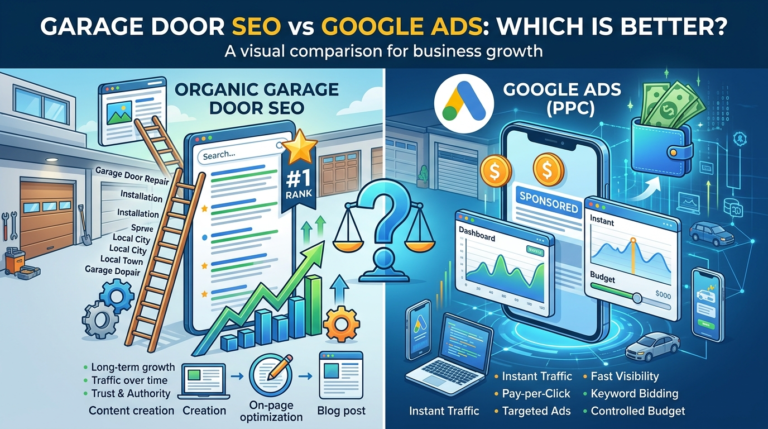
Blog Every garage door company owner eventually asks the same question: should I put my marketing budget into SEO, into Google […]
 Blog
Blog SEO takes months to pay off. Google Ads can start ringing your phone today. For garage door companies, where a […]
 Blog
Blog If your garage door company isn’t showing up when someone searches “garage door repair near me,” you’re handing free jobs […]
Marketing
Reviews, local SEO and a website that is easy to use work best together. Tell us about the business and we’ll tell you, plainly, what we would do next.