
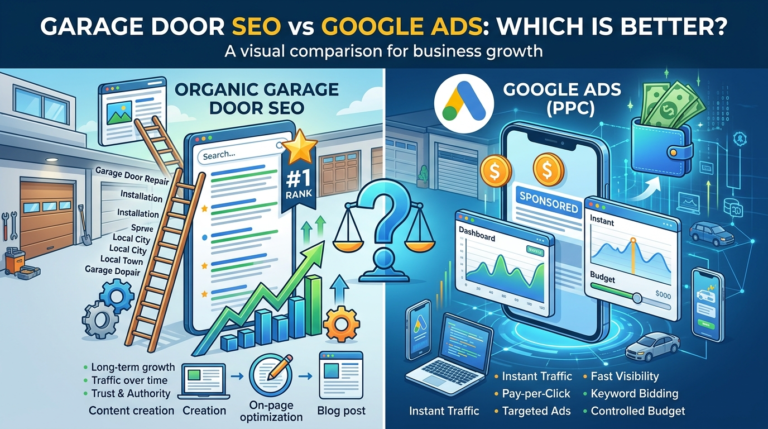
Garage Door SEO vs Google Ads: Which Is Better?
Every garage door company owner eventually asks the same question: should I put my marketing budget into SEO, into Google […]
Most electrical contractors already know that word of mouth is one of the strongest sources of new business they have. A happy customer telling a neighbor, a property manager mentioning you to…

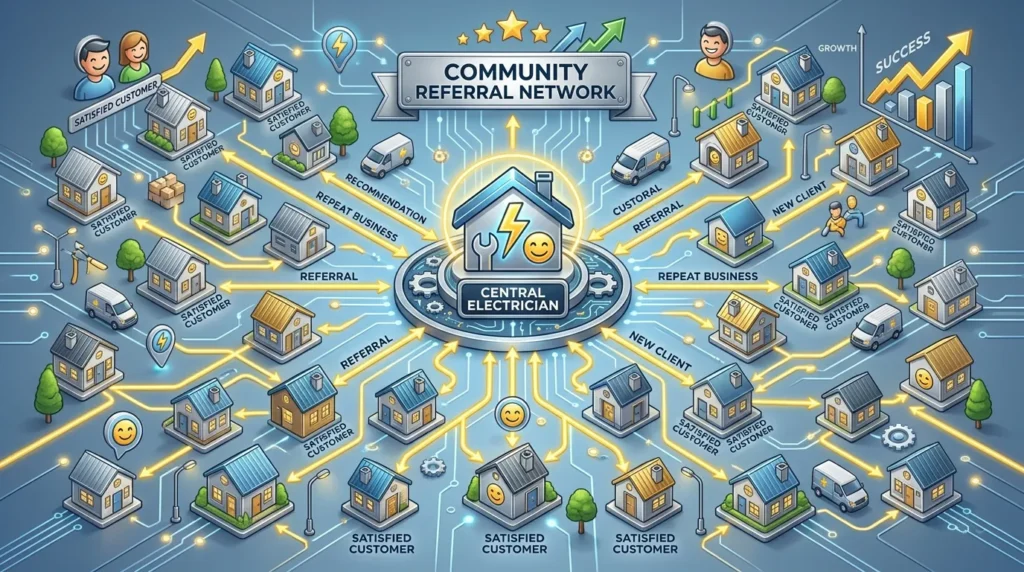
Most electrical contractors already know that word of mouth is one of the strongest sources of new business they have. A happy customer telling a neighbor, a property manager mentioning you to another landlord, a homeowner recommending you in a local Facebook group, these referrals tend to convert into paying customers faster than almost any ad ever will, simply because trust is already built in before you even answer the phone.
The problem is that most electricians leave this entirely to chance. They do great work, hope customers mention them to someone else, and move on to the next job without ever building a system around it. A referral program takes that same natural behavior and gives it structure, consistency, and a reason for customers to actually follow through instead of just meaning to.
Relying on customers to refer you simply because they liked your work sounds reasonable, but in practice, most people are busy and referrals slip their mind unless something prompts them. A customer might genuinely think you did excellent work and still never mention you to anyone, not because they wouldn’t recommend you, but because the thought never comes up again after the job is done.
A structured referral program solves this by giving customers a clear, easy reason to think of you again, and a specific action to take when they do.
The incentive doesn’t need to be extravagant, but it does need to feel worthwhile to both the person referring you and the new customer they send your way. Common approaches that work well for electrical contractors include a flat discount on a future service for the referring customer, a smaller welcome discount for the new customer being referred, or a fixed cash reward once the referred job is completed and paid for.
Whatever you choose, keep the terms simple. A complicated, multi-tiered system with confusing rules will discourage people from bothering, while a clear “refer a friend, you both get a discount” offer is easy to remember and easy to explain to someone else.
This is where a lot of referral programs quietly fail. If a customer has to remember your business name, find your website, and fill out a form just to refer someone, most people simply won’t follow through, even if they liked your work and meant to.
Reduce that friction as much as possible. A simple referral card handed out at the end of a job, a text message sent a few days after service with a direct link, or a dedicated referral page on your website that’s easy to share all lower the barrier significantly. The easier it is to refer you in the moment they’re thinking about it, the more referrals you’ll actually collect.

The best time to mention your referral program isn’t randomly through a newsletter months later. It’s right after a job is completed successfully, while the customer is still feeling good about the work and the experience. A simple mention at checkout, paired with a follow-up text or email a day or two later, catches people at the point where they’re most likely to think positively about recommending you.
Nothing kills a referral program faster than a customer feeling like their referral went unnoticed or unrewarded. Use a simple tracking method, whether that’s a unique referral code, a dedicated intake question asking new customers how they heard about you, or a basic spreadsheet if you’re just getting started. The system doesn’t need to be sophisticated. It just needs to be reliable enough that every referral gets properly credited and rewarded without customers having to chase you down about it.
Electrical contractors who work with property managers, general contractors, real estate agents, or commercial clients often overlook one of their strongest referral sources. A property manager who trusts you can send you steady, repeat business across multiple properties, far more valuable over time than a single homeowner referral. Consider a separate, slightly more substantial incentive structure for these kinds of professional referral relationships, since the long-term value they bring is usually much higher.
A referral program that’s mentioned once and never again tends to be forgotten quickly. Reinforce it in a few different places: a line on your invoice, a mention in your email signature, a quick reminder in your seasonal newsletter if you send one, and a note on your website’s contact or thank-you page. None of these need to be pushy. A simple, consistent reminder is often all it takes to keep the program top of mind.
The financial incentive matters, but a genuine thank-you message when someone refers you, separate from the discount or reward itself, goes a long way toward making customers feel appreciated rather than transactional. A short, personal text or call acknowledging the referral, even before the reward is applied, reinforces the relationship and makes people more likely to refer you again in the future.
A flat discount, commonly somewhere between 10% and 20% off a future service, or a fixed dollar reward once the referred job is completed, tends to work well. The exact amount matters less than keeping the offer simple and clearly communicated.
Rewarding both tends to produce the strongest results, since it gives the new customer a reason to follow through and gives the referring customer a genuine incentive to make the introduction in the first place.
A simple method is asking every new customer how they heard about you during your initial intake call or form, paired with a unique referral code or link if you want more precise tracking as your program grows.
Right after a job is completed successfully, while the customer is still satisfied with the experience, tends to produce the best response. A follow-up reminder a day or two later, through text or email, reinforces the ask without feeling pushy.
Yes, and often even more effectively than with residential customers. Property managers, general contractors, and real estate professionals can become repeat sources of consistent business, so it’s worth considering a separate, slightly more substantial incentive for these professional relationships.
A referral program doesn’t replace the quality of your work, it simply gives customers who already trust you a clear, easy reason and method to pass that trust along to someone else. The electricians who build the strongest referral pipelines aren’t necessarily doing anything dramatically different in the field. They’re simply making it effortless for satisfied customers to send new business their way, and consistently thanking them when they do.
Keep reading
 Blog
Blog Every garage door company owner eventually asks the same question: should I put my marketing budget into SEO, into Google […]
 Blog
Blog A lot of garage door companies build a website with a homepage, a services page, and a contact page — […]
 Blog
Blog SEO takes months to pay off. Google Ads can start ringing your phone today. For garage door companies, where a […]
Marketing
Reviews, local SEO and a website that is easy to use work best together. Tell us about the business and we’ll tell you, plainly, what we would do next.