
Garage Door SEO vs Google Ads: Which Is Better?
Every garage door company owner eventually asks the same question: should I put my marketing budget into SEO, into Google […]
This question comes up in almost every conversation chiropractors have about marketing. You’re already stretched thin between patients, paperwork, and running a practice, so it’s fair to ask whether time spent posting…
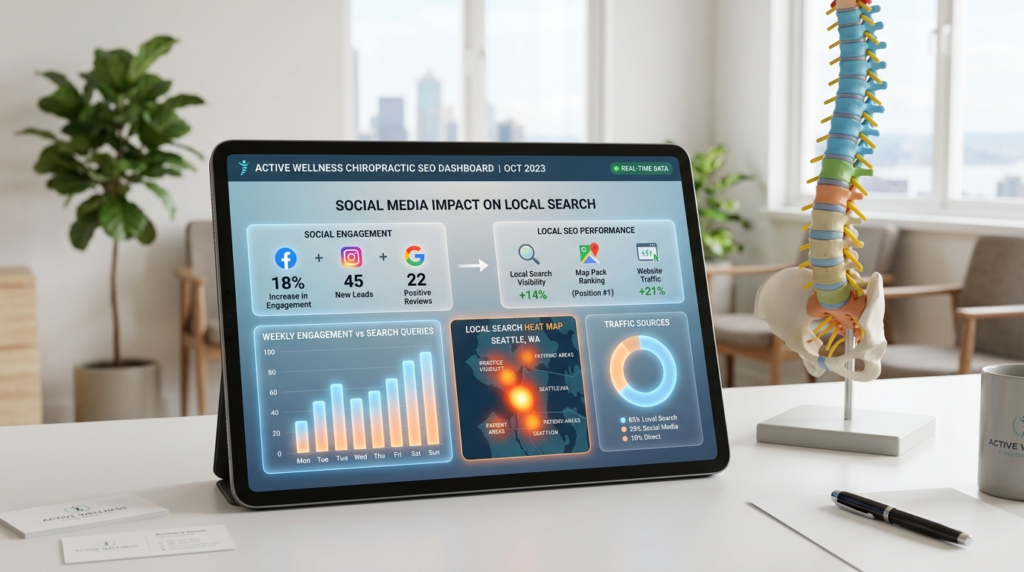
This question comes up in almost every conversation chiropractors have about marketing. You’re already stretched thin between patients, paperwork, and running a practice, so it’s fair to ask whether time spent posting on Instagram or Facebook is actually worth it, or whether it’s just noise that feels productive without moving the needle.
The honest answer is a little more nuanced than a simple yes or no. Social media doesn’t directly boost your Google rankings the way backlinks or a well-optimized Google Business Profile do. But dismissing it as irrelevant to your SEO isn’t accurate either. Here’s what’s really going on.
Google’s own representatives have said repeatedly over the years that likes, shares, and follower counts on platforms like Facebook or Instagram are not factored directly into search rankings. Google can’t reliably see most of what happens inside these platforms anyway, since a lot of social activity sits behind logins and private algorithms that search engines don’t have full access to.
So if you’re hoping that posting more on Instagram will directly push your website up in Google’s results, that specific mechanism doesn’t exist. But that’s not the end of the story.
Social media influences several things that do affect your SEO, just not in a straight line.
It drives branded searches. When someone sees your clinic on Facebook or Instagram, a portion of them will later search your business name directly on Google rather than clicking through from the post itself. Branded searches like this are a positive signal to Google, since they suggest real people are actively looking for your specific business.
It extends the life and reach of your content. When you publish a blog post about, say, managing lower back pain, sharing it on social media puts it in front of people who might never have found it through search alone. Some of those people will link to it, mention it, or search for it later, all of which can indirectly support your SEO efforts.
It builds the kind of online presence that supports trust signals. An active, consistent social media profile adds to the overall picture of your clinic as a real, established business. It’s one more piece of evidence, alongside reviews and directory listings, that tells both patients and search engines your practice is legitimate and active.
It can generate backlinks over time. Local bloggers, community pages, or even patients writing about their own experience sometimes link back to a clinic’s website after discovering it through social media first. These links carry real SEO value, even though the original discovery happened on a platform Google doesn’t directly credit.
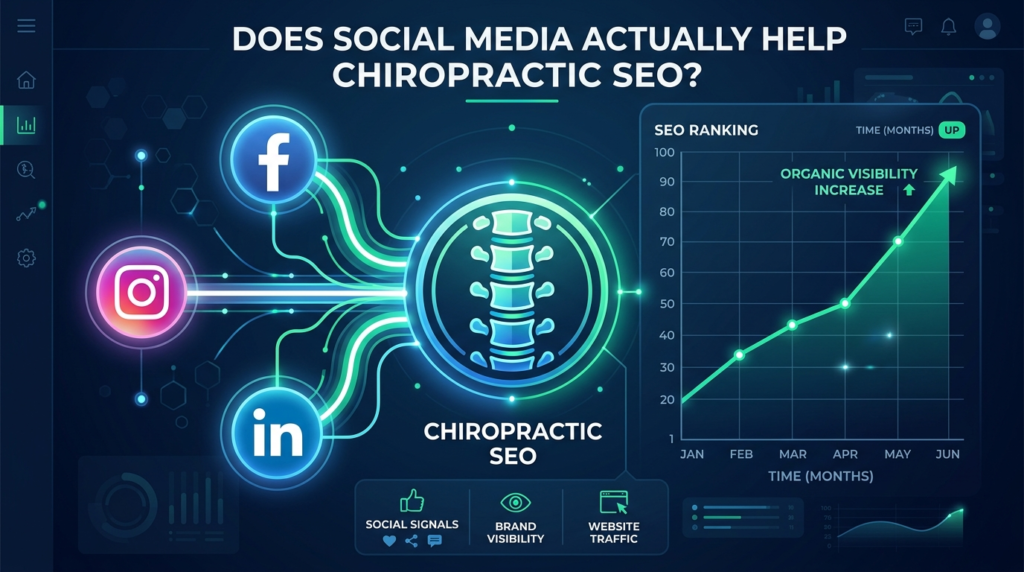
Multiple studies and case analyses over the years, including reporting from sources like Search Engine Journal and Moz’s own ranking factor surveys, have consistently placed social signals low on the list of direct ranking factors, while backlinks, on-page content, and local signals like Google Business Profile activity remain far more influential.
At the same time, businesses with an active social presence often show stronger overall online visibility, not because the platforms themselves are ranking factors, but because active businesses tend to also have more reviews, more mentions, more backlinks, and more branded search volume, all of which do influence rankings. Social media tends to be correlated with strong SEO performance rather than a direct cause of it.
For most clinics, yes, but with realistic expectations about what it’s actually doing for you. Social media is unlikely to move your Google rankings on its own. What it does well is:
If you’re choosing where to spend limited marketing time, your Google Business Profile, your reviews, and your website content will generally have a more direct and measurable impact on your rankings than social media will. But treating social media as entirely disconnected from your SEO efforts misses how these pieces support each other in practice.
Rather than asking “does social media help my SEO,” a more useful question is “does social media help build the overall online presence that supports my SEO.” Framed that way, the answer becomes clearer. A chiropractic clinic that posts patient education content, shares blog articles, and stays visible in the local community on social media is more likely to earn the reviews, mentions, and branded searches that genuinely do influence rankings, compared to a clinic with no social presence at all.
Social media isn’t a direct lever for chiropractic SEO, and any claim promising instant ranking boosts from social activity alone should be viewed skeptically. But it plays a real, supporting role in building the kind of visible, trusted, active online presence that feeds into the factors Google does care about. Used consistently, alongside a solid Google Business Profile and a steady stream of reviews, social media becomes one part of a bigger picture rather than a magic fix on its own, and that’s exactly how it should be treated.
Keep reading
 Blog
Blog Every garage door company owner eventually asks the same question: should I put my marketing budget into SEO, into Google […]
 Blog
Blog A lot of garage door companies build a website with a homepage, a services page, and a contact page — […]
 Blog
Blog SEO takes months to pay off. Google Ads can start ringing your phone today. For garage door companies, where a […]
Marketing
Reviews, local SEO and a website that is easy to use work best together. Tell us about the business and we’ll tell you, plainly, what we would do next.