
Garage Door SEO vs Google Ads: Which Is Better?
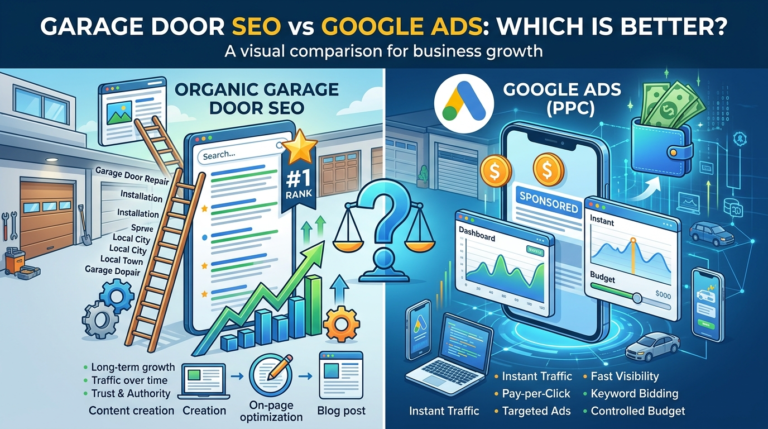
Every garage door company owner eventually asks the same question: should I put my marketing budget into SEO, into Google […]
If you’ve ever typed “orthodontist near me” into Google and noticed your own practice isn’t anywhere on the first page, you already understand the problem SEO solves. Patients aren’t flipping through the…

If you’ve ever typed “orthodontist near me” into Google and noticed your own practice isn’t anywhere on the first page, you already understand the problem SEO solves. Patients aren’t flipping through the phone book anymore. They’re searching, scrolling past the first three or four results, and booking a consultation with whichever practice looks the most credible and easiest to reach.
SEO, search engine optimization, is simply the process of making your website show up when those searches happen. It sounds technical, and parts of it are, but the core ideas are straightforward once they’re broken down. This guide walks through everything an orthodontist needs to understand to get started, with nothing skipped.
SEO isn’t one task, it’s a combination of several moving parts that all influence where your website lands in Google’s search results:
For an orthodontic practice, local SEO carries the most weight, since almost every patient search includes some form of location intent, even if the word “near me” isn’t typed.
Before touching your website, it helps to understand the kinds of searches orthodontic patients run. They generally fall into a few categories:
A complete SEO strategy addresses all four. Many practices only focus on the first category and miss a large share of patients who are still researching before they’re ready to commit.
This is the single highest-impact step for a beginner, and it’s free.
Keep your name, address, and phone number identical everywhere else online, Yelp, Healthgrades, Facebook, dental directories. Inconsistent information across listings confuses Google and can quietly suppress your local rankings.
Keyword research sounds intimidating, but for a beginner, it can be simplified into one question: what would a patient actually type into Google to find a practice like yours?
Common high-value keywords for orthodontists include:
Each important service, Invisalign, traditional braces, clear aligners, retainers, should have its own dedicated page on your website, rather than being crammed into one general “services” page. Dedicated pages give Google a clear signal about exactly what you offer and allow each page to rank for its own set of keywords.
Even great content struggles to rank if the website itself has technical problems. The basics every beginner should check:
If you’re not sure where your site currently stands, a free SEO audit will identify these issues quickly.
Blogging might feel disconnected from “real” SEO, but it plays a direct role in how Google evaluates your website’s expertise and relevance.
Effective content topics for orthodontic practices include:
Each blog post should link back to a relevant service page on your site. This internal linking helps both patients and Google navigate your site more effectively, and it spreads ranking value across multiple pages instead of relying on just one.
Reviews influence two things at once: how trustworthy your practice looks to patients, and how Google ranks your local listing.
A steady stream of new reviews tends to outperform a large batch collected all at once and then left untouched.
Backlinks, links from other websites pointing to yours, remain one of the strongest trust signals in SEO. For orthodontic practices, the most realistic and effective sources include:
These don’t need to come from massive websites. A handful of relevant, local backlinks often outperforms dozens of low-quality, unrelated ones.

This is the most common question from beginners, and the honest answer is that SEO is a gradual process, not an instant one. Most practices begin noticing increased website traffic within 60-90 days of consistent effort, with measurable increases in new patient inquiries typically following within 3-6 months. Highly competitive markets may take longer, while smaller towns with less competition can see results faster.
SEO compounds over time. Unlike paid ads, which stop generating traffic the moment you stop paying, SEO continues working in the background once it’s established, which is what makes it worth the patience it requires.
SEO doesn’t require doing everything perfectly on day one. Start with the highest-impact steps , a fully optimized Google Business Profile, a fast and mobile-friendly website, and dedicated service pages for your core treatments, and build from there. The practices that see the strongest long-term results are the ones that stay consistent month after month rather than treating SEO as a short-term campaign.
SEO is a long-term marketing strategy. While some improvements may be noticeable within a few weeks, most orthodontic practices begin seeing meaningful results within three to six months. The timeline depends on competition, website quality, and the consistency of your SEO efforts.
Orthodontists can improve their rankings by optimizing their website, creating helpful content, targeting local keywords, earning quality backlinks, and maintaining an updated Google Business Profile. Consistent SEO work helps build authority and visibility over time.
Yes. Most patients search for orthodontic services near their home, work, or school. Local SEO helps your practice appear in Google Maps and local search results, making it easier for nearby patients to find and contact your office.
The best keywords depend on your services and location. Common examples include “orthodontist near me,” “braces for adults,” “Invisalign treatment,” “affordable orthodontist,” and location-based phrases such as “orthodontist in [add your city like York City, Los Angeles, Chicago, etc].” Choosing keywords that match patient search intent can improve traffic and lead generation.
Keep reading
 Blog
Blog Every garage door company owner eventually asks the same question: should I put my marketing budget into SEO, into Google […]
 Blog
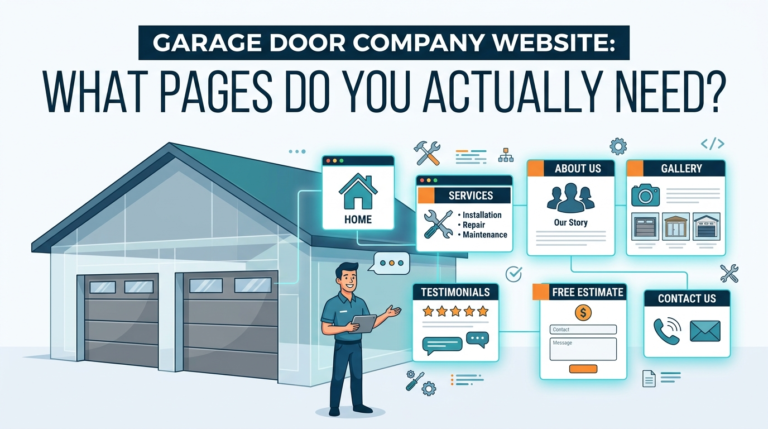
Blog A lot of garage door companies build a website with a homepage, a services page, and a contact page — […]
 Blog
Blog SEO takes months to pay off. Google Ads can start ringing your phone today. For garage door companies, where a […]
Marketing
Reviews, local SEO and a website that is easy to use work best together. Tell us about the business and we’ll tell you, plainly, what we would do next.