
Garage Door SEO vs Google Ads: Which Is Better?
Every garage door company owner eventually asks the same question: should I put my marketing budget into SEO, into Google […]
Invisalign patients don’t search the same way general orthodontic patients do. Someone looking for “braces near me” might still be deciding whether they even want treatment. Someone searching “Invisalign consultation” has usually…
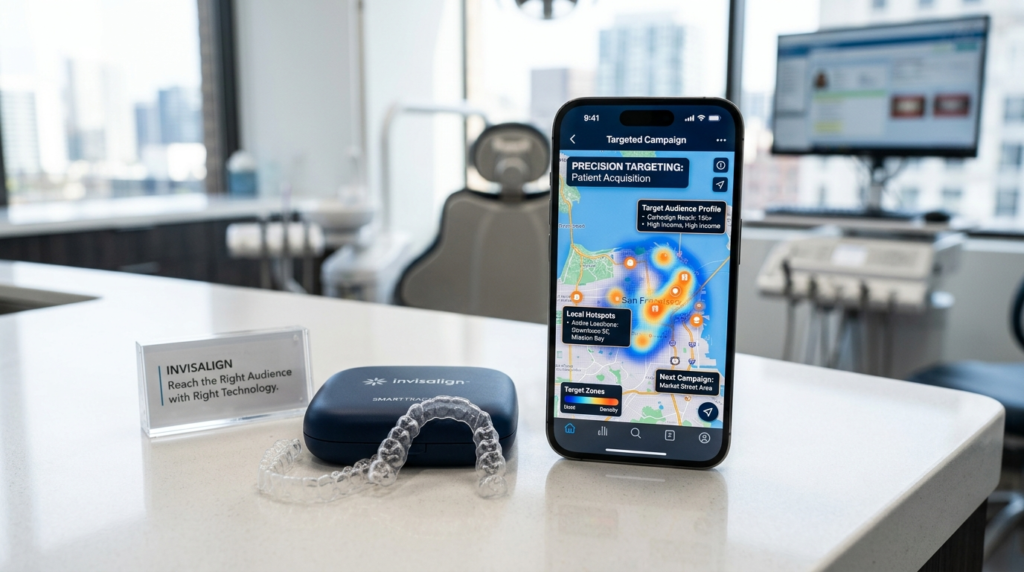
Invisalign patients don’t search the same way general orthodontic patients do. Someone looking for “braces near me” might still be deciding whether they even want treatment. Someone searching “Invisalign consultation” has usually already done the research, ruled out traditional braces, and is actively comparing providers. That’s a warmer lead, and it’s worth treating differently than general orthodontic marketing.
A lot of practices make the mistake of folding Invisalign into their general marketing instead of building a dedicated strategy around it. Here’s what an effective, fully built-out approach actually looks like.
Invisalign patients tend to be researching a specific product, not just a general treatment category. They’re often comparing your practice against other Invisalign providers nearby, sometimes including general dentists who also offer it, not just other orthodontists. That changes what needs to happen on your website and in your ads.
Treating Invisalign as just another bullet point on a general services page misses the chance to capture this more specific, often higher-intent search traffic.
This is the foundation everything else builds on. A dedicated page, separate from your general “services” page, should include:
This page becomes the landing destination for both your SEO content and any paid campaigns targeting Invisalign keywords, rather than sending that traffic to a generic homepage where the specific intent gets lost.
General orthodontic SEO and Invisalign SEO overlap, but they’re not identical. Keywords worth targeting specifically include:
These keywords should be reflected not just in the dedicated landing page, but in supporting blog content that links back to it, building topical authority around Invisalign specifically, rather than relying on one page to carry the entire keyword strategy alone.
Bundling Invisalign keywords into a general orthodontic ad campaign usually dilutes performance. A dedicated campaign allows for tighter control and better results:
Tracking cost per Invisalign consultation specifically, rather than blending it into overall campaign performance, makes it much easier to see whether this channel is actually working.
Visual proof matters more for Invisalign than almost any other service, since prospective patients are often comparing the clear aligner experience against their expectations of metal braces.
This kind of content consistently performs well on social media and helps convert undecided visitors once they reach your website.
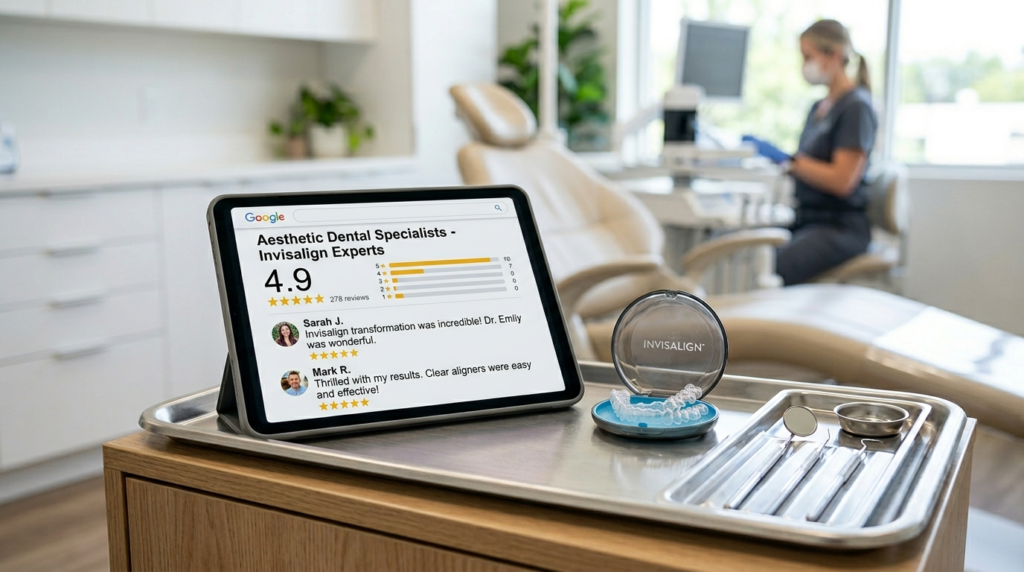
Many practices treat their Google Business Profile as a general listing and miss an easy opportunity here.
This directly affects whether your practice appears when someone searches “Invisalign near me” and checks the local map results before clicking into any websites.
Patients researching Invisalign tend to have a fairly predictable set of questions. Content built around these questions captures both SEO traffic and genuine reader interest:
Each piece should link back to your dedicated Invisalign landing page, creating a clear path from informational content to the page where a visitor can actually book a consultation.
Not every Invisalign-interested visitor books a consultation on their first visit to your website. A few tactics help recover that interest:
These recovery tactics often convert leads that would otherwise be lost entirely after the first website visit.
To know whether your Invisalign marketing is working, focus on:
A monthly review of these numbers makes it possible to shift budget toward what’s actually converting rather than what simply generates traffic.
Generating consistent Invisalign leads isn’t about adding a few keywords to a general campaign, it requires a dedicated landing page, focused keyword and content strategy, separately tracked ad campaigns, and visual proof that builds trust quickly. Practices that treat Invisalign as its own marketing channel, rather than folding it into general orthodontic marketing, consistently see stronger lead quality and better conversion rates.
If you’d like help building a dedicated Invisalign marketing strategy for your practice, schedule a free consultation to see what’s currently missing and where the easiest wins are.
One of the most effective ways to generate more Invisalign leads is to improve your online visibility. This can include optimizing your website for local searches, running targeted Google Ads, collecting patient reviews, and creating educational content that answers common questions about Invisalign treatment.
Yes. Google Ads can help your practice appear when people actively search for terms like “Invisalign near me” or “Invisalign provider in [city].” Because these users are already looking for treatment, Google Ads can be an effective way to attract qualified leads.
Absolutely. SEO helps your practice rank higher in organic search results, making it easier for potential patients to find you without clicking on paid ads. A strong SEO strategy can generate consistent leads over time and support long-term growth.
Many people research reviews before booking a consultation. Positive feedback from real patients can build trust and give prospective patients confidence in your practice. Reviews often play a major role in the decision-making process, especially for elective treatments like Invisalign.
Content that answers common patient questions tends to perform well. Topics such as Invisalign cost, treatment length, eligibility, before-and-after results, and comparisons with braces can help educate visitors and encourage them to schedule a consultation.
Keep reading
 Blog
Blog Every garage door company owner eventually asks the same question: should I put my marketing budget into SEO, into Google […]
 Blog
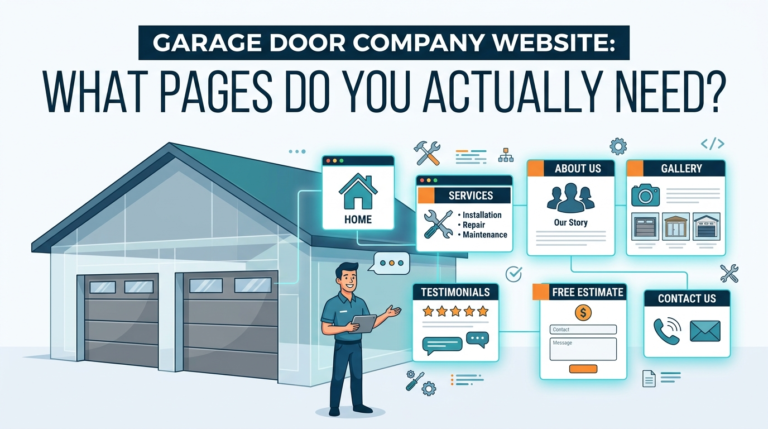
Blog A lot of garage door companies build a website with a homepage, a services page, and a contact page — […]
 Blog
Blog SEO takes months to pay off. Google Ads can start ringing your phone today. For garage door companies, where a […]
Marketing
Reviews, local SEO and a website that is easy to use work best together. Tell us about the business and we’ll tell you, plainly, what we would do next.