
Garage Door SEO vs Google Ads: Which Is Better?
Every garage door company owner eventually asks the same question: should I put my marketing budget into SEO, into Google […]
This question comes up in almost every first conversation with an orthodontist who’s serious about marketing. Understandably so, most practices don’t have an unlimited budget, and it’s reasonable to want to know…
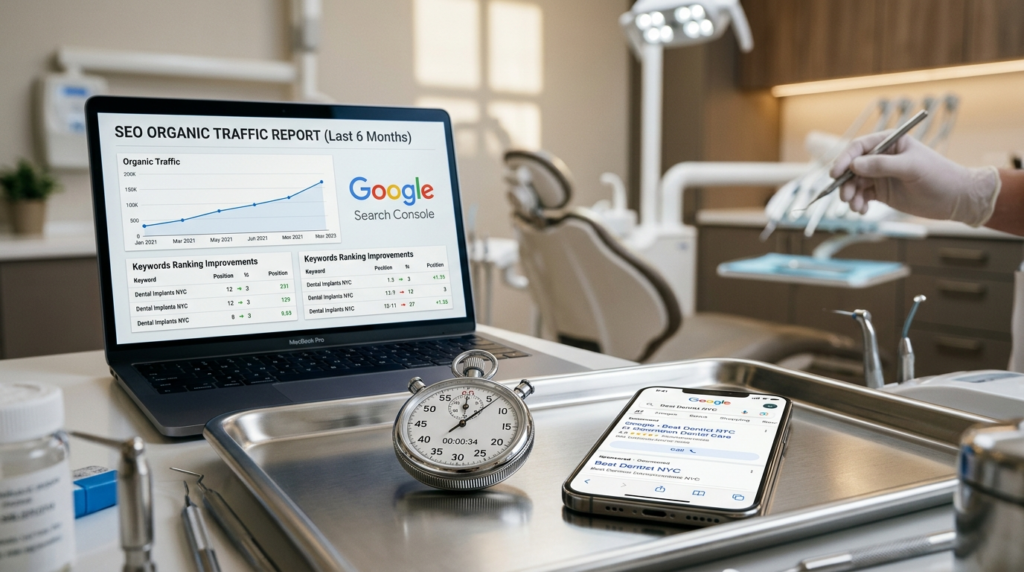
This question comes up in almost every first conversation with an orthodontist who’s serious about marketing. Understandably so, most practices don’t have an unlimited budget, and it’s reasonable to want to know which channel will actually bring patients through the door first.
The short answer is that Google Ads works faster, often within days. SEO takes longer, usually a few months before results become meaningful. But that short answer leaves out the part that actually matters: speed isn’t the only thing worth optimizing for, and the two channels aren’t really competing with each other so much as solving different problems.
Here’s the full picture.
Google Ads campaigns can start generating clicks, calls, and consultation requests within hours of going live, since they place your practice at the top of search results immediately rather than waiting to earn that position organically.
In practical terms, most orthodontic practices start seeing booked consultations from a well-built campaign within the first one to two weeks, assuming the campaign is targeting the right keywords and sending traffic to a strong, conversion-ready landing page. This makes Google Ads the obvious choice when a practice needs to fill the schedule quickly, after opening a new location, during a slow season, or when SEO hasn’t built up enough traffic yet.
The tradeoff is that this speed comes with an ongoing cost. The moment the ad budget stops, the traffic stops too. There’s no residual value carried forward once the campaign is paused, which is the core tradeoff against SEO.
SEO works on a completely different timeline. Because rankings are earned rather than purchased, Google needs time to evaluate your website’s relevance, trustworthiness, and authority before moving it up in search results.
A realistic timeline looks like this:
This timeline is slower, but the value compounds. Once a page ranks well, it continues generating traffic without an ongoing cost per click, which is fundamentally different from how paid ads work.
Google Ads wins clearly here. Results within days versus months makes this the obvious choice for any practice needing immediate visibility.
SEO wins over a longer horizon. While SEO requires consistent investment to build and maintain, it doesn’t carry a per-click cost once established. Google Ads requires continuous spend to maintain the same level of visibility indefinitely.
SEO wins here as well. Pausing an SEO investment doesn’t immediately erase rankings the way pausing a Google Ads campaign immediately stops traffic. SEO value tends to persist, even if it can erode slowly over time without maintenance.
This one is closer, but many studies on search behavior suggest users click organic results more often than paid ones when both are visible, partly because some users actively skip past ads. That said, paid ads still capture a meaningful share of clicks, particularly for high-intent searches where users want an answer immediately.
Google Ads wins here. Paid campaigns allow precise control over which keywords, locations, demographics, and even times of day your ads appear, which is harder to control directly with organic SEO.
SEO tends to win, particularly past the 12-month mark, since the cost per booked consultation from organic traffic typically decreases over time as rankings stabilize, while the cost per click for competitive paid keywords tends to stay flat or increase.

Treating this as an either-or decision usually isn’t the right approach. The two channels serve different roles in the same overall strategy:
For practices with a limited initial budget and a clear need to choose one channel first, the right starting point depends on the situation:
Google Ads wins on speed, often delivering results within days. SEO wins on long-term efficiency and sustainability, typically taking three to six months to show meaningful results but continuing to generate value well beyond that point without an ongoing per-click cost. Neither channel fully replaces the other, and practices that rely on only one are usually leaving consultations, and revenue, on the table.
If you’re trying to figure out the right starting mix for your specific budget and market, schedule a free consultation to map out a strategy that balances both effectively.
Yes. Google Ads can start generating visibility and patient inquiries as soon as your campaigns go live. SEO typically takes several months to build momentum because search engines need time to crawl, index, and evaluate your website.
Neither is universally better. Google Ads is often used for immediate visibility, while SEO focuses on building long-term organic traffic. Many orthodontic practices find that combining both strategies provides the best balance between short-term and long-term growth.
The timeline varies based on competition, website quality, and the effort invested. Many practices begin seeing meaningful improvements within three to six months, while highly competitive markets may require more time to achieve strong rankings.
If a practice needs patient leads quickly, Google Ads may be the better starting point. If the goal is to build sustainable online visibility and reduce reliance on paid advertising over time, SEO is often a worthwhile long-term investment. The right choice depends on your goals and budget.
Absolutely. Google Ads can help generate immediate traffic while SEO builds organic rankings in the background. Using both strategies together can increase visibility across search results and create more opportunities for potential patients to find your practice.
Keep reading
 Blog
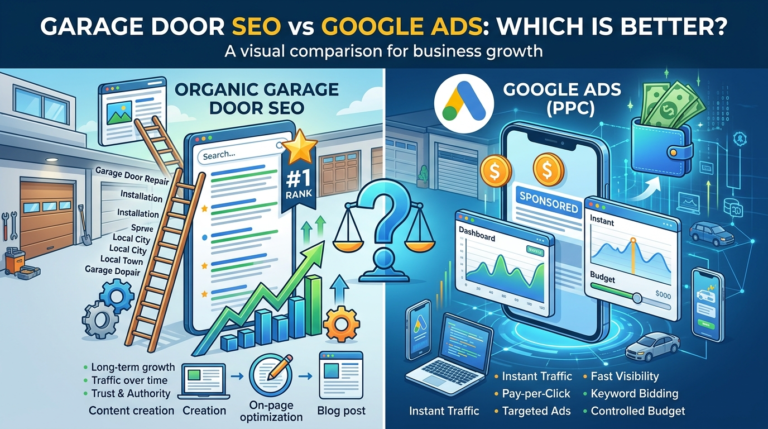
Blog Every garage door company owner eventually asks the same question: should I put my marketing budget into SEO, into Google […]
 Blog
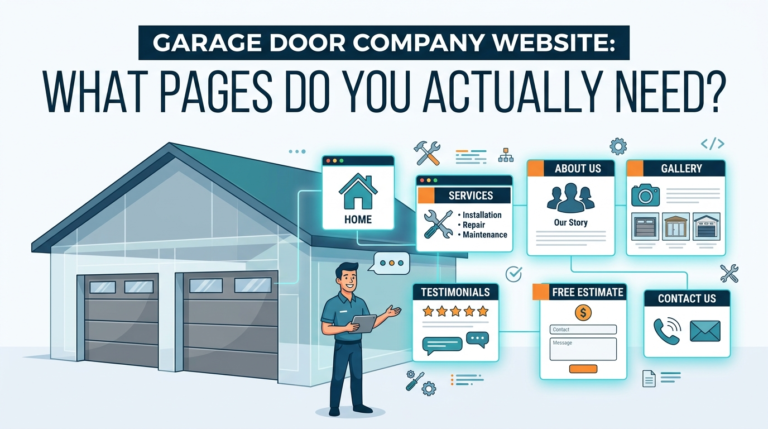
Blog A lot of garage door companies build a website with a homepage, a services page, and a contact page — […]
 Blog
Blog SEO takes months to pay off. Google Ads can start ringing your phone today. For garage door companies, where a […]
Marketing
Reviews, local SEO and a website that is easy to use work best together. Tell us about the business and we’ll tell you, plainly, what we would do next.