
Garage Door SEO vs Google Ads: Which Is Better?
Every garage door company owner eventually asks the same question: should I put my marketing budget into SEO, into Google […]
If you’ve spent any time researching SEO for your electrical business, you’ve probably come across the term EEAT and wondered whether it actually matters, or whether it’s just another piece of jargon…

If you’ve spent any time researching SEO for your electrical business, you’ve probably come across the term EEAT and wondered whether it actually matters, or whether it’s just another piece of jargon agencies throw around to sound technical. It matters, and understanding it in plain terms can genuinely help explain why some electrician websites, sometimes with less polished design than yours, still manage to outrank you.
EEAT stands for Experience, Expertise, Authoritativeness, and Trustworthiness. It’s not a single ranking factor you can check off a list. It’s more of a framework Google’s quality evaluators and search systems use to judge whether a website deserves to be shown to people searching for something important, like who to trust with the electrical wiring in their home.
Electrical work falls into a category Google treats with extra scrutiny, often referred to internally as “Your Money or Your Life” content, or YMYL for short. This category covers topics where bad information or an untrustworthy provider could genuinely harm someone, whether financially or physically. A poorly wired panel isn’t just an inconvenience, it’s a real safety risk, and Google’s systems are built to be more cautious about which websites get shown prominently for searches related to this kind of work.
This means an electrician’s website doesn’t just need to look professional. It needs to genuinely demonstrate that the business behind it is real, qualified, and trustworthy, in ways Google’s systems can actually detect.
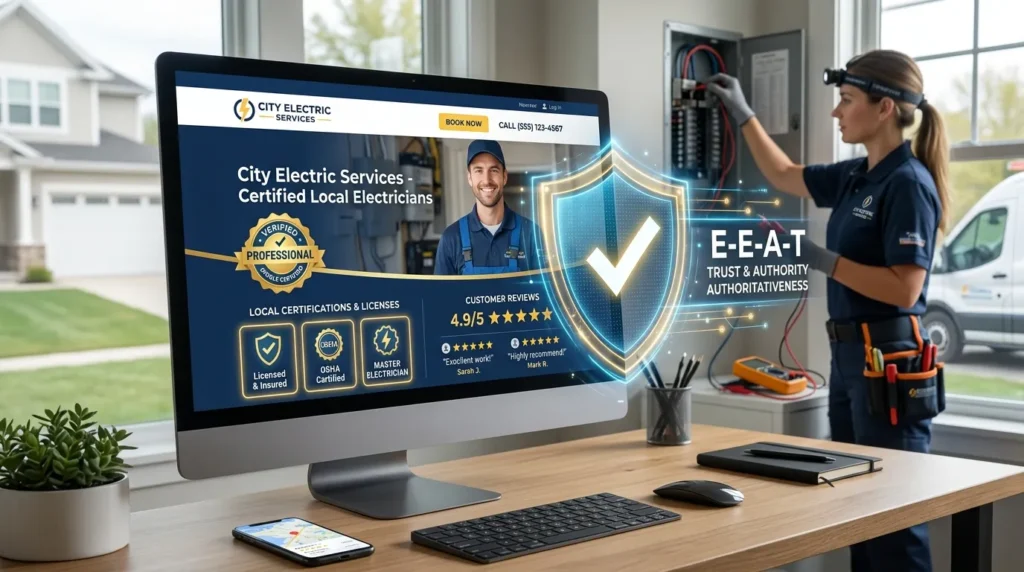
The first part of EEAT is about demonstrated, firsthand experience. This is where genuine photos of completed jobs, honest before-and-after project descriptions, and real case studies of specific work you’ve done carry far more weight than generic descriptions of services you offer.
A page that simply states “we install panels and handle rewiring” reads as generic. A page that walks through an actual panel upgrade you completed, the specific challenges involved, and the outcome for the homeowner demonstrates real, firsthand experience in a way Google’s systems, and human readers, can recognize as authentic.
Expertise is about the depth and accuracy of the information your website provides. A blog that answers real electrical questions clearly and correctly, explaining things like why certain panel upgrades are necessary or how to recognize warning signs of faulty wiring, signals genuine expertise far more effectively than a page that simply lists your services without explaining anything.
This is also where credentials matter. Listing your licenses, certifications, and any specialized training clearly on your website, ideally with your team’s actual names and qualifications rather than a vague “our expert team,” reinforces that real, qualified expertise sits behind your content.
Authoritativeness is less about what you say about yourself and more about what others say and confirm about you. This includes things like being listed accurately across reputable local directories, being mentioned or linked to by other legitimate local businesses or organizations, and having a presence that’s consistent and verifiable across the web.
A licensed electrician who’s a member of relevant trade organizations, who’s been featured in local news for community involvement, or who has consistent, verified listings across platforms like Google Business Profile, Better Business Bureau, and local chambers of commerce builds a level of authority that a website alone can’t manufacture.
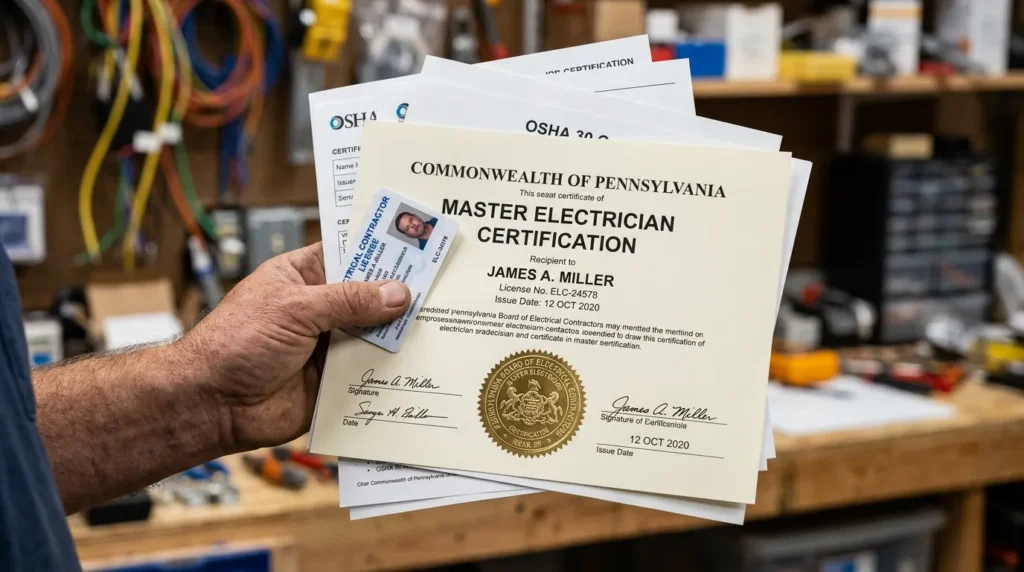
Trustworthiness pulls together elements from the other three, but it also includes specific, concrete signals. A secure website with proper HTTPS encryption, clear and accurate contact information, transparent pricing where possible, and a strong, consistent flow of genuine customer reviews all contribute here.
Trustworthiness is also damaged easily. Outdated information, broken links, inconsistent business details across different listings, or a suspicious pattern of reviews all quietly undermine the trust signals Google is trying to evaluate, even if the underlying business is completely legitimate and reputable.
A few concrete steps make a meaningful difference here. Add a genuine, detailed About page introducing your team by name, including licenses, years of experience, and specific specialties, rather than a vague paragraph about company values. Publish blog content that answers real, specific electrical questions thoroughly and accurately, rather than short, generic posts that skim the surface. Keep your business information, name, address, phone number, and licensing details, consistent and accurate across your website and every directory you’re listed on. Actively collect and respond to reviews, since a steady, genuine flow of feedback reinforces trustworthiness in a way few other signals can replicate as clearly. And make sure your website itself reflects basic security and professionalism, with HTTPS enabled and no outdated, broken, or misleading information left sitting unaddressed.
None of these signals build overnight, and there’s no single change that suddenly unlocks strong EEAT standing. It’s built gradually, through consistent, genuine effort: real content, real credentials clearly displayed, real reviews collected over time, and a website that accurately and transparently represents a legitimate, established business. Electricians who treat this as an ongoing part of how they present themselves online, rather than a one-time checklist, tend to see steadier, more durable improvements in how their site performs in search results over time.
Not exactly. EEAT is a framework Google’s quality evaluators use to assess content quality, and while it isn’t a single, measurable ranking signal on its own, the individual elements that build strong EEAT, like genuine expertise, credentials, reviews, and trustworthy website signals, do influence how well a site performs in search results.
Electrical work falls into Google’s “Your Money or Your Life” category, since poor information or an untrustworthy provider could lead to real financial or safety consequences. Google applies extra scrutiny to search results in these categories, making strong EEAT signals especially important for electrical contractors.
No. A newer or smaller electrical business can still build strong EEAT signals by clearly displaying real licenses and credentials, publishing genuinely helpful and accurate content, and collecting authentic reviews consistently from the start.
This varies, but most electricians see gradual improvement over several months of consistent effort, since EEAT is built through an accumulation of genuine signals over time rather than a single change.
An occasional negative review, especially one you’ve responded to professionally, generally isn’t damaging and can even reinforce authenticity. A pattern of unaddressed complaints or a complete absence of reviews tends to hurt trustworthiness far more than a few honest, resolved negative reviews.
EEAT isn’t a technical trick to game or a checklist you complete once and forget about. It’s Google’s way of trying to identify which electrician websites genuinely represent qualified, trustworthy, established businesses, and which ones simply look the part on the surface. Building these signals honestly, through real credentials, real content, and a real pattern of trustworthy behavior online, tends to produce the kind of lasting search visibility that a quick technical fix never could.
Keep reading
 Blog
Blog Every garage door company owner eventually asks the same question: should I put my marketing budget into SEO, into Google […]
 Blog
Blog A lot of garage door companies build a website with a homepage, a services page, and a contact page — […]
 Blog
Blog SEO takes months to pay off. Google Ads can start ringing your phone today. For garage door companies, where a […]
Marketing
Reviews, local SEO and a website that is easy to use work best together. Tell us about the business and we’ll tell you, plainly, what we would do next.