
Garage Door SEO vs Google Ads: Which Is Better?
Every garage door company owner eventually asks the same question: should I put my marketing budget into SEO, into Google […]
If you run a small chiropractic practice, you’ve probably looked at Google Ads and thought it was built for the bigger clinics down the road the ones with marketing teams and budgets…
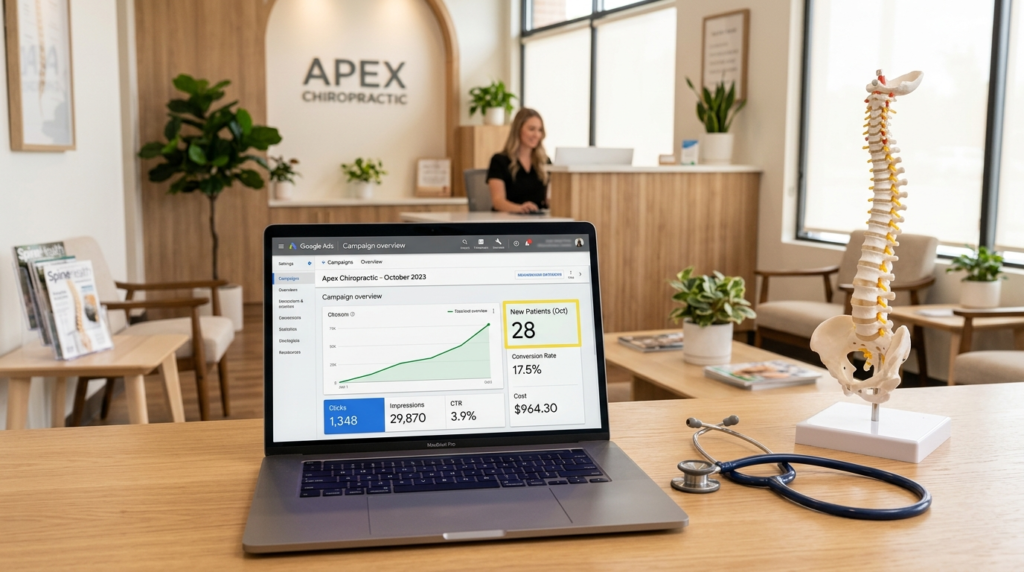
If you run a small chiropractic practice, you’ve probably looked at Google Ads and thought it was built for the bigger clinics down the road the ones with marketing teams and budgets you can’t match. It’s a reasonable assumption, but it’s not actually true. Google Ads doesn’t reward whoever spends the most money. It rewards whoever targets the right person, at the right moment, with the right message. A one-location clinic with a tight budget can absolutely compete, and often outperform a larger competitor who’s spreading their ad spend too thin across the wrong audience.
Here’s what that actually looks like in practice.
Google Ads for local services runs differently than you might expect. You’re not bidding against every chiropractor in the country, or even the state. You’re bidding against the handful of clinics within a realistic driving distance of your patients. That’s a much smaller pool than it feels like from the outside.
On top of that, Google’s auction system factors in something called Quality Score, basically a measure of how relevant and useful your ad and landing page are to the person searching. A small clinic with a tightly targeted, well-written ad and a clear, fast landing page can earn a strong Quality Score and pay less per click than a bigger competitor running a sloppy, generic campaign. Budget matters, but relevance often matters more.
The biggest mistake small clinics make when they first try Google Ads is targeting too broadly. Bidding on a word like “chiropractor” by itself pulls in clicks from people researching general information, students, or people in cities you don’t even serve. None of that becomes a patient, and all of it eats your budget.
Instead, build your campaign around local, specific phrases:
These searches carry urgency and clear intent. Someone typing “back pain chiropractor near me” is usually ready to book, not just browse.
You don’t need thousands of dollars a month to see results. Many small clinics start seeing steady inquiries with a modest daily budget, as long as it’s focused tightly on local keywords rather than spread across broad, competitive terms.
A good starting approach is to pick a small number of high-intent keywords rather than trying to cover every possible search term. Five or six well-chosen phrases that match what your ideal patient actually types will outperform thirty loosely related keywords every time.
Google lets you control exactly where your ads show up, down to a radius around your clinic. This is one of the most important settings for a small practice, because it stops you from paying for clicks from people who could never realistically become patients.
If you’re in a dense city, a tighter radius usually works better. If you’re in a more spread-out suburban or rural area, you might need a wider radius to reach enough people. Either way, take the time to set this intentionally rather than leaving it on a default setting.
This part gets overlooked constantly, and it’s often the difference between an ad that works and one that quietly burns money. If someone clicks an ad about back pain relief, don’t send them to your generic homepage. Send them to a page that speaks directly to that concern, loads quickly, and makes booking an appointment obvious within a few seconds of arriving.
A strong landing page for a chiropractic ad usually includes:
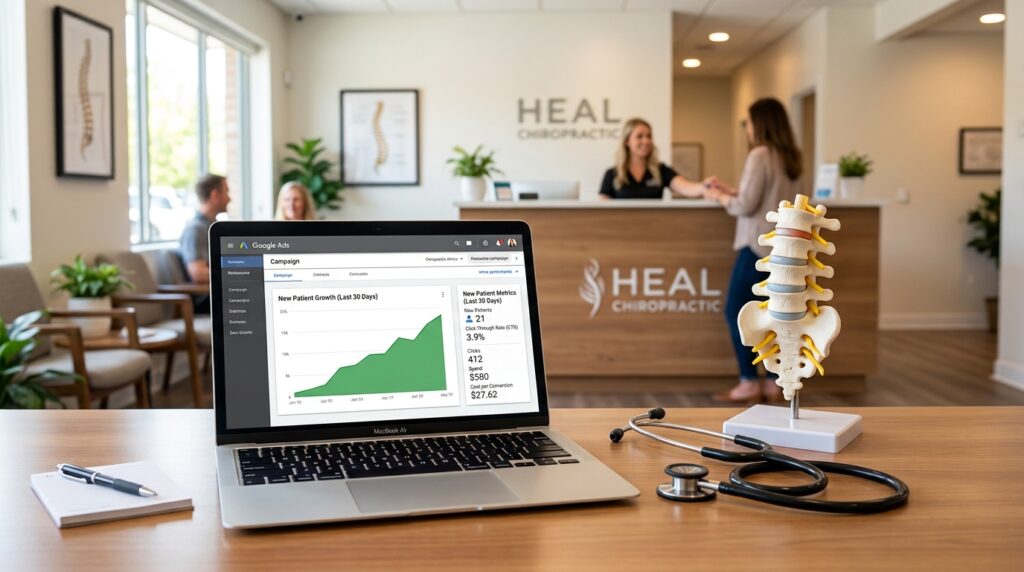
Generic ad copy blends in and gets ignored. Specific, honest copy gets clicked. Mention your city by name. Mention what you actually treat. If you offer same-day appointments, say so directly, that single detail can be the deciding factor for someone in pain who doesn’t want to wait a week to be seen.
One advantage small clinics have is that they can pay close attention to every single lead, something larger practices with higher volume sometimes lose track of. Set up call tracking or a simple tracking number so you know which calls came from your ads. Check in weekly during your first month or two, and don’t be afraid to pause keywords that are generating clicks but no calls.
Google Ads campaigns improve as they collect data. The first couple of weeks are usually about learning, not about perfect results. Resist the urge to judge a campaign after three days. Give it a few weeks of consistent budget and adjustments before deciding whether something needs a bigger change.
Picture a single-location clinic spending a modest amount per day, targeting only a five-mile radius around the practice, with three or four tightly chosen keywords tied to common pain points like neck pain, lower back pain, and auto accident recovery. That clinic isn’t trying to compete with every chiropractor in the metro area. It’s simply making sure that anyone nearby, searching with real intent, sees their ad first. That’s a completely realistic setup for a small practice, and it’s the kind of campaign that tends to produce steady, affordable results over time.
Google Ads isn’t a tool reserved for clinics with big marketing budgets. It’s a tool that rewards precision. A small chiropractic practice that targets the right local searches, writes honest ad copy, and sends people to a landing page built around their actual need can compete with, and often beat, larger competitors who are casting too wide a net. The clinics that struggle with Google Ads usually aren’t struggling because they’re small. They’re struggling because they’re targeting too broadly, or sending traffic to a page that doesn’t match what the patient was looking for. Fix those two things, and a modest budget can go a long way.
Keep reading
 Blog
Blog Every garage door company owner eventually asks the same question: should I put my marketing budget into SEO, into Google […]
 Blog
Blog A lot of garage door companies build a website with a homepage, a services page, and a contact page — […]
 Blog
Blog SEO takes months to pay off. Google Ads can start ringing your phone today. For garage door companies, where a […]
Marketing
Reviews, local SEO and a website that is easy to use work best together. Tell us about the business and we’ll tell you, plainly, what we would do next.