
Garage Door SEO vs Google Ads: Which Is Better?
Every garage door company owner eventually asks the same question: should I put my marketing budget into SEO, into Google […]
Most orthodontists didn’t go through years of dental school and orthodontic residency to spend their evenings figuring out Google Ads or arguing with a website developer about page load times. Yet that’s…
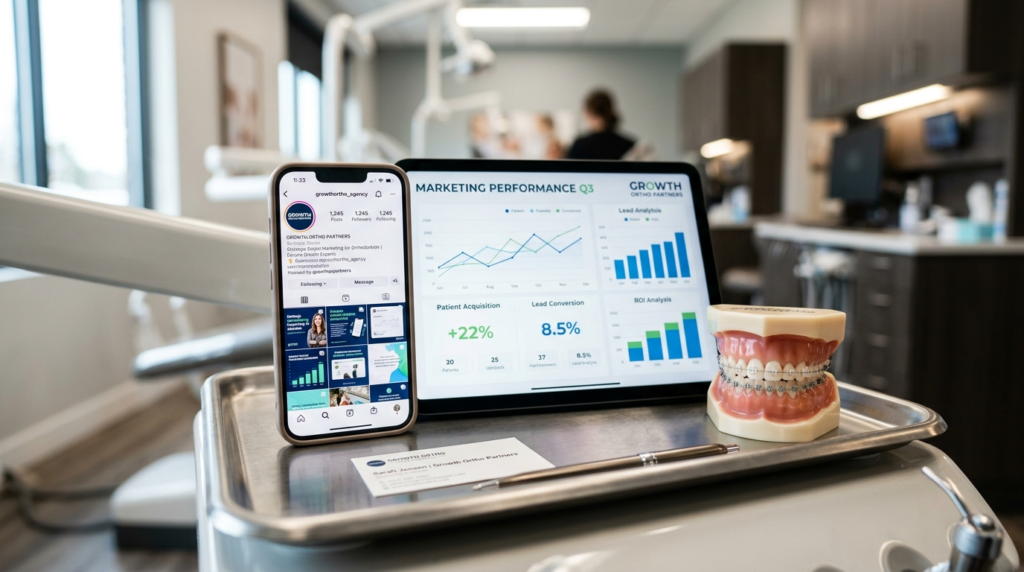
Most orthodontists didn’t go through years of dental school and orthodontic residency to spend their evenings figuring out Google Ads or arguing with a website developer about page load times. Yet that’s exactly where a lot of practice owners end up, either doing marketing themselves between patients, or hiring a generalist agency that treats an orthodontic practice the same way it treats a plumbing company or a law firm.
Neither approach tends to work well. Here’s why orthodontic marketing needs a specialized agency, and what that actually looks like in practice.
A generalist agency knows how to run ads, build websites, and post on social media. What it usually doesn’t know is the specific patient journey that leads someone from “my kid might need braces” to actually sitting in your consultation chair.
That journey involves things a generic marketer rarely accounts for:
An agency without orthodontic experience will often run the same playbook they’d use for a roofing company, broad keywords, generic ad copy, a one-size-fits-all landing page, and wonder why the cost per lead is high and the lead quality is low.
Many orthodontists try managing their own marketing for a while, usually out of a reasonable instinct to save money. The hidden cost shows up in three places:
This isn’t a knock on orthodontists, it’s simply a different skill set, the same way most marketers couldn’t safely place a bracket.

A specialized orthodontic marketing agency builds campaigns and content around how patients and parents actually decide. That means addressing cost upfront, comparing treatment options clearly, and making the path to booking a consultation as frictionless as possible, because they’ve seen what works across many practices, not guessed at what might work for one.
Generic keyword research tools will surface high-volume terms, but volume alone doesn’t mean quality. An agency experienced in orthodontic marketing knows the difference between a keyword that brings traffic and one that brings booked consultations, and that distinction directly affects how efficiently your budget is spent.
Instead of generic blog posts, a specialized agency writes around the actual questions patients ask before choosing a practice: cost, insurance, comparison between treatment types, and what to expect at each stage. This kind of content does double duty, it improves SEO and it answers the questions that move someone closer to booking.
Healthcare marketing comes with considerations a general business doesn’t have to think about, patient privacy in testimonials and before-and-after photos, accurate claims about treatment outcomes, and appropriate handling of contact forms. An experienced agency builds campaigns with these considerations already in mind, rather than learning them after a problem comes up.
A generalist agency often reports on clicks, impressions, and website visits. A specialized agency reports on cost per booked consultation, consultation-to-treatment conversion rate, and patient lifetime value by channel, the numbers that actually reflect whether the practice is growing.
A strong agency relationship typically includes a few consistent elements:
If an agency can’t clearly explain how their work connects to new patient bookings, that’s usually a sign they’re managing the practice the same way they’d manage any other local business.
Before committing to a marketing partner, it’s worth asking:
The answers to these questions usually reveal quickly whether an agency understands orthodontic marketing specifically, or is applying a generic template to a specialized field.
Marketing an orthodontic practice well requires more than running ads and posting on social media , it requires understanding how patients and parents actually make this particular decision, what builds trust in a healthcare setting, and how to turn that trust into booked consultations consistently. A generalist agency can check the boxes of “doing marketing.” A specialized one builds a system that’s actually built around how your patients think and search.
If your current marketing feels like a list of disconnected tasks rather than a strategy, schedule a free consultation to see what a marketing partnership built specifically around orthodontic practices can look like for yours.
Most orthodontists are focused on patient care, not digital marketing. A marketing agency helps attract new patients through SEO, advertising, content creation, and online reputation management, allowing the practice to focus on treatment while maintaining a steady flow of leads.
Yes. A specialized marketing agency can improve your online visibility, optimize your website, manage local search listings, and run targeted campaigns that connect your practice with people actively searching for orthodontic treatment in your area.
That depends on your resources and expertise. Many orthodontic practices find that working with an agency provides access to a team of specialists without the cost and time commitment of building an in-house marketing department.
Orthodontists should look for services such as local SEO, website optimization, content marketing, paid advertising, social media management, and online review generation. These services work together to improve visibility and support long-term practice growth.
A good agency tracks meaningful metrics such as website traffic, consultation requests, phone calls, appointment bookings, and patient acquisition costs. The goal is not just more clicks, but more qualified patients choosing your practice.
Keep reading
 Blog
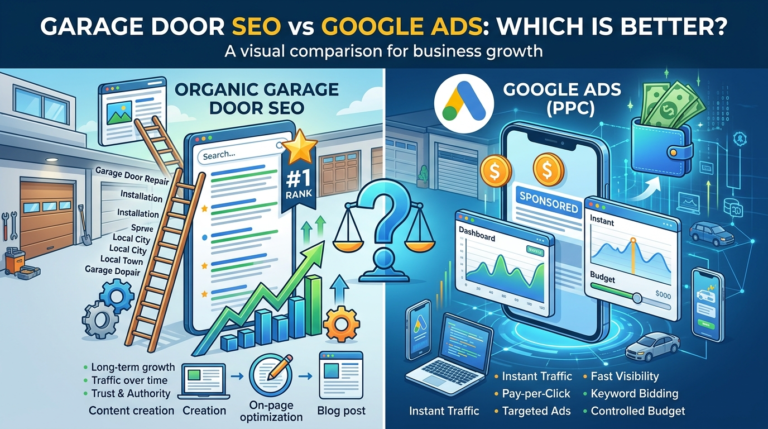
Blog Every garage door company owner eventually asks the same question: should I put my marketing budget into SEO, into Google […]
 Blog
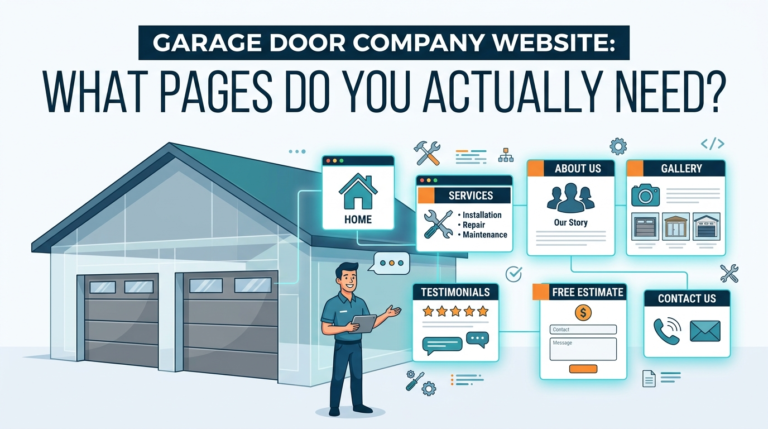
Blog A lot of garage door companies build a website with a homepage, a services page, and a contact page — […]
 Blog
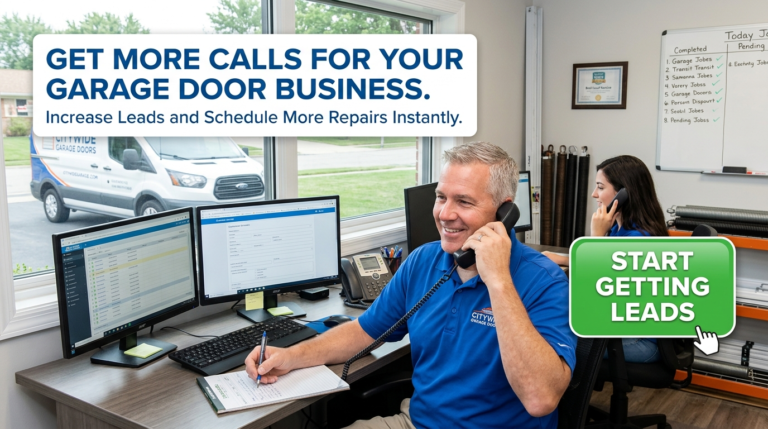
Blog SEO takes months to pay off. Google Ads can start ringing your phone today. For garage door companies, where a […]
Marketing
Reviews, local SEO and a website that is easy to use work best together. Tell us about the business and we’ll tell you, plainly, what we would do next.